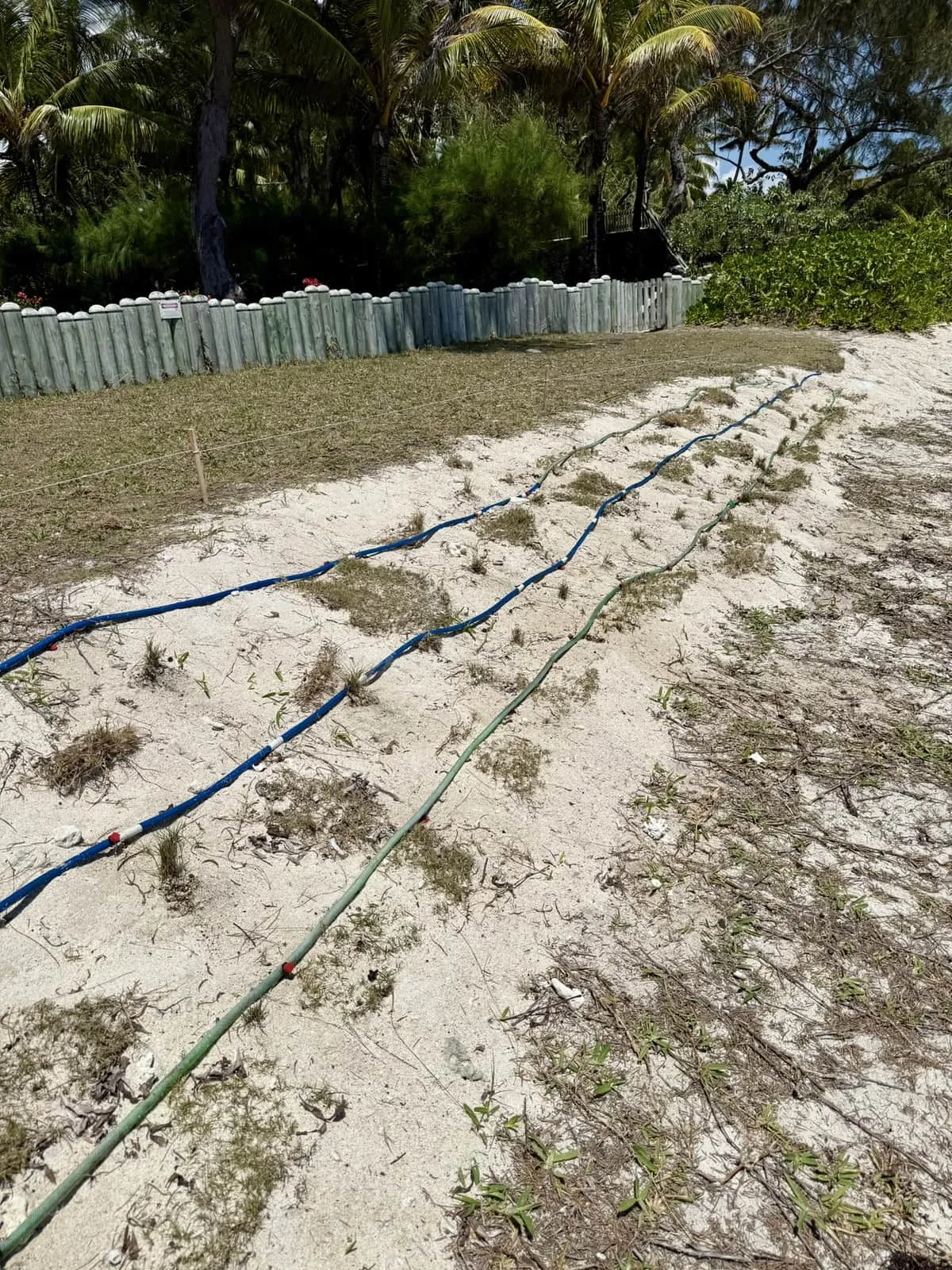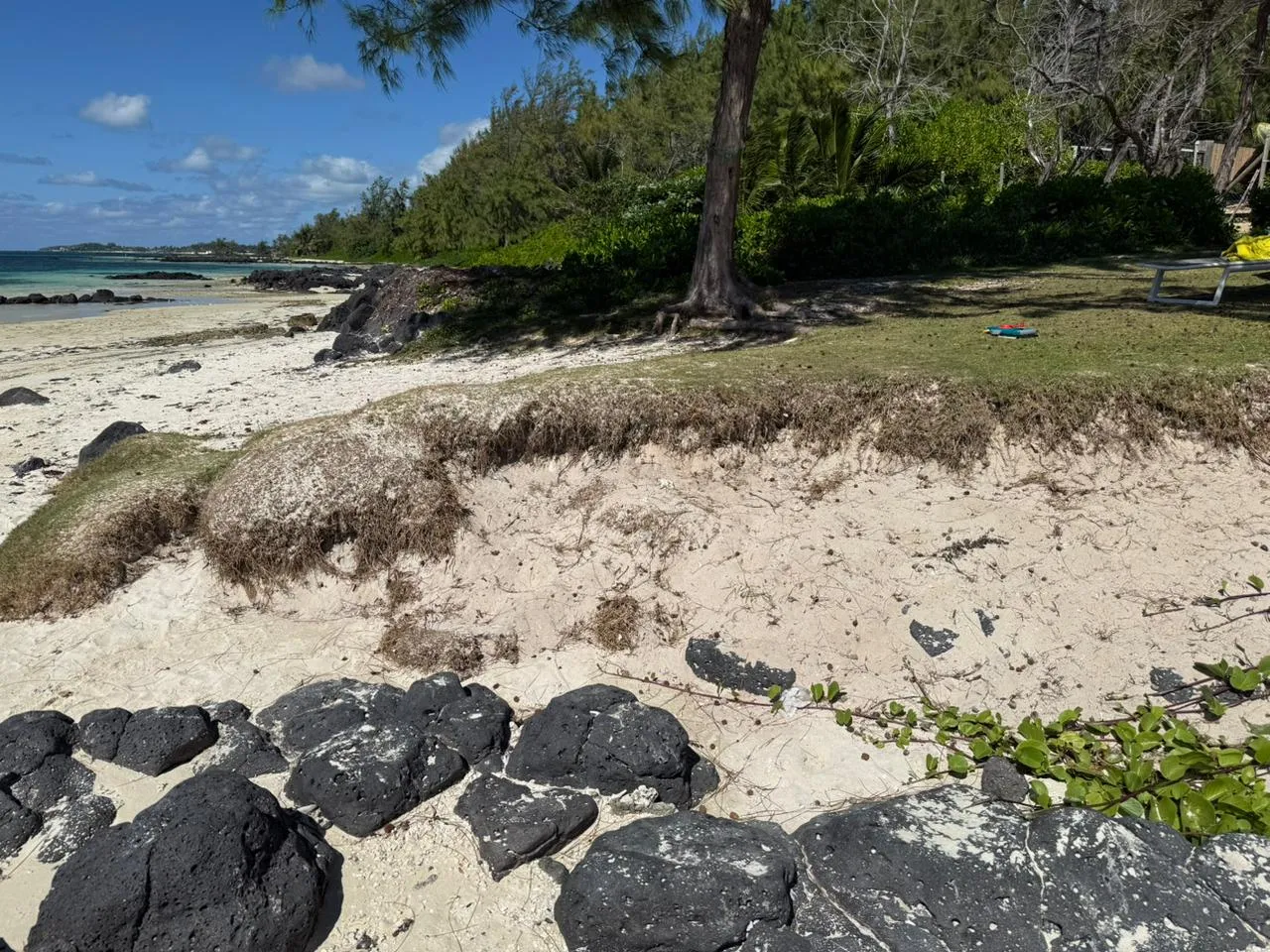
Mauritius’s beaches are shrinking for four connected reasons: coral reef decline is removing the natural breakwater that once absorbed wave energy before it reached shore, hard coastal structures are disrupting the natural sediment transport that keeps beaches fed, cyclone-season storms are stripping sand faster than it can rebuild, and vegetation loss along the beach crest is weakening what’s left to hold sand in place. None of these act alone — they compound.
Reef decline removes a natural breakwater
Healthy coral reefs dissipate the majority of incoming wave energy before it reaches the shoreline. As reefs decline across the Indian Ocean, that natural buffering weakens, and more wave energy reaches the beach face directly — accelerating erosion on reef-fronted coastlines that were never engineered to absorb it. This is one reason reef health and beach stability are treated as one connected system, not two separate problems.
Sediment transport disruption from hard structures
Seawalls, revetments and other hard coastal defences can protect the property immediately behind them, but they often interrupt the longshore sediment transport that feeds beaches downstream. OceanVolts assessed exactly this dynamic at Trou aux Biches, modelling the upstream and downstream impact of a rock-revetment structure on the surrounding sediment budget — and how the structure’s wave reflection and refraction were reshaping the coastal zone around it. Understanding that transport pathway is often the difference between a fix that works and one that just moves the erosion next door.
Storm and cyclone exposure
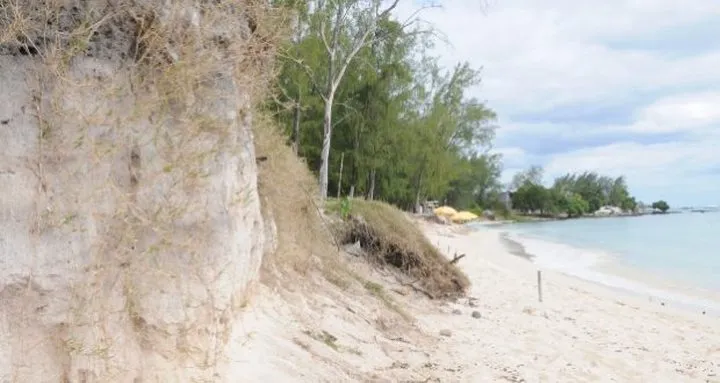
Mauritius sits directly in a cyclone belt. Storm surge and elevated wave energy during the cyclone season strip sand from the beach face faster than normal wave action can replace it — particularly on beaches already weakened by reef decline or disrupted sediment supply.
Vegetation loss and unmanaged beach access
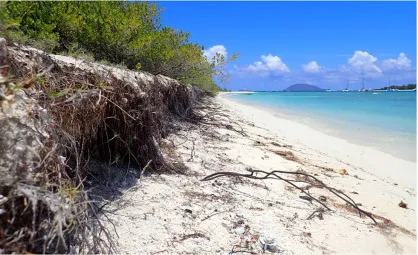
Coastal vegetation binds sand at the beach crest and dune toe. Where it’s cleared — for construction, access paths, or storm damage — that binding is lost, and the beach becomes more vulnerable to ongoing erosion. OceanVolts’s natural restoration work at a private villa in Poste Lafayette illustrates the alternative: a 35-metre eroded beach frontage was rebuilt using soft-engineering methods — sand bags and site-specific coastal plant species to reconstruct the berm and stabilise the dune toe — combined with pedestrian-traffic management and a 12-month post-implementation maintenance programme to secure long-term results.